
There is nothing quite like biting into a piece of perfectly crispy, golden-brown fried chicken. The crunch, juiciness, and flavor all depend on the proper technique, perfect seasoning, and, most importantly, the best oils for crispy fried chicken.
Your cooking oil can significantly impact your fried chicken experience, affecting the taste, texture, and overall outcome.
This post contains affiliate links, which means we may receive a commission at no cost to you. As an Amazon Associate, I earn from qualifying purchases.
Best Oils for Crispy Fried Chicken
When it comes to frying chicken, not all oils are created equal. The key issues to consider are the oil’s smoke point (the temperature at which it starts to break down and burn) and its flavor.
Here are our top cooking oil choices for frying chicken:
1. Peanut oil: Peanut oil is a favorite for frying chicken, and for good reason. It has a high smoke point (around 450°F) and a neutral taste that won’t overpower your seasoning. Beyond these benefits, peanut oil delivers the most incredible light, crispy texture without any greasiness.
2. Canola oil: Canola oil has a high smoke point, sitting at about 400°F. This is the key factor to getting ultra-crispy chicken. What’s important to note is that canola oil, when used properly, will give you consistently crispy results—it’s an easy one!
3. Vegetable oil: This oil is a versatile option for frying chicken. Most vegetable oil blends have a high smoke point (around 400°F), which, combined with their neutral taste, makes them great for frying chicken.
4. Sunflower oil: Sunflower oil has a high smoke point of about 440°F. It’s also mild in flavor – nothing too strong to overwhelm the chicken flavor. With sunflower oil, you’ll get a light, crispy coating.
5. Avocado oil: For a more health-forward oil alternative, avocado oil is a fantastic option. We recommend it for its high smoke point (520°F). It also contains heart-healthy monounsaturated fats as a bonus! Just take note that it’s more expensive than other oils.
6. Lard or tallow: If you want to go old-school, frying your chicken in lard or beef tallow can add an incredible depth of flavor and crispiness that’s hard to replicate with vegetable-based oils. They also have a high smoke point, making them a solid choice for frying.
Oils You Should Avoid for Crispy Fried Chicken
These are the oils you want to avoid when whipping up your golden, crispy chicken:
- Olive oil: It has a low smoke point and a strong flavor that doesn’t go well with fried chicken. Steer clear!
- Butter: While delicious, butter burns too quickly for deep frying, and it can also leave your chicken tasting a little too rich.
Pro Tips for Crispy Fried Chicken Every Time
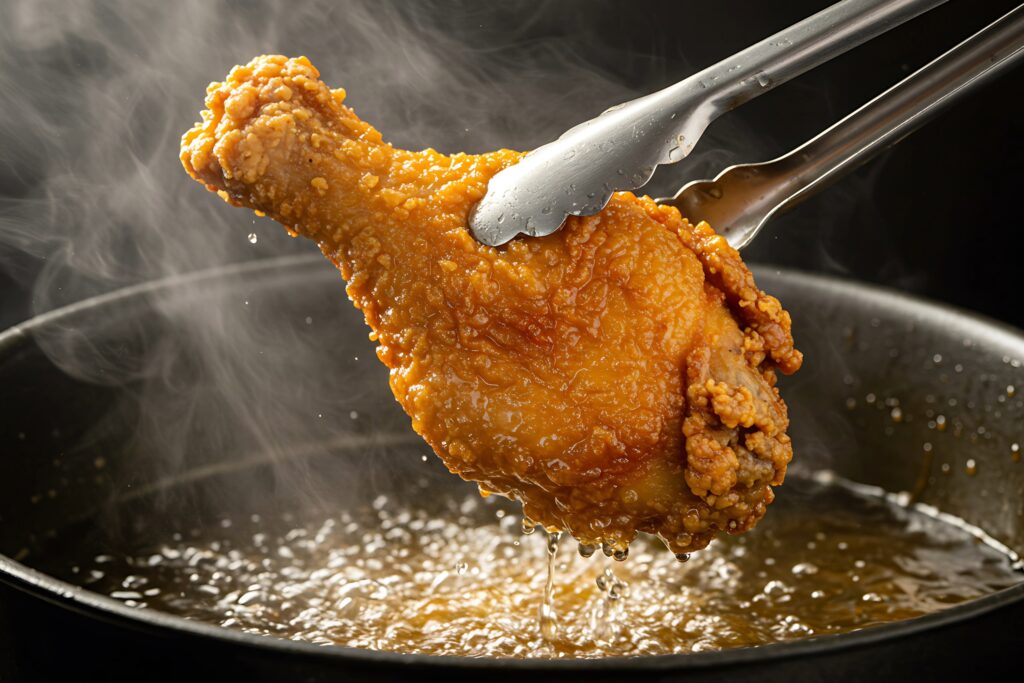
Now that you know which oils to use, let’s discuss the technique. Perfect fried chicken isn’t just about throwing it in hot oil—it requires the right prep and execution.
Here are a few of our top tips for getting lip-smacking results:
1. Brine or marinate your chicken: A good brine or buttermilk marinade makes all the difference. Soaking your chicken for at least 4 hours (or overnight) in buttermilk, salt, and spices gives you juicy and tender fried chicken that melts in the mouth.
2. Use a double-coating method: Double-dip your chicken in seasoned flour for an extra-crispy crust. Start with a dip in flour, then in buttermilk, and finally back into the flour before frying. This creates those signature crunchy ridges.
3. Let the coating set: First, dredge your chicken in flour. Then, let it rest for 10-15 minutes before frying. This will help the coating stick better and prevent it from falling off in the oil.
4. Maintain the right oil temperature: The sweet spot for frying chicken is between 325°F and 350°F. If the oil is too hot, the outside will burn before the inside cooks. If the chicken is too low, it will absorb too much oil, making it greasy.
5. Don’t overcrowd the pan: Frying too many pieces at once drops the oil temperature and results in soggy chicken. Fry in batches to maintain even cooking.
6. Use a thermometer: Check the internal temperature of your chicken. To be fully cooked, it should reach 165°F in the thickest part.
7. Drain properly: Drain fried chicken on a wire rack instead of paper towels. This prevents steam from making the coating soggy.
Best Cookware for Frying Crispy Chicken
The type of cookware you use can also impact how your fried chicken turns out. Here are some of our best options for frying chicken:
Cast Iron Skillet
Cast iron skillet: Like this beautiful green one, a cast-iron skillet is a classic choice for frying chicken. It retains heat exceptionally well and maintains a consistent temperature, which is crucial for even cooking.
To care for your cast-iron skillet: After frying, let the skillet cool slightly before cleaning. Wipe out excess oil with a paper towel, then scrub gently with a brush and hot water (no soap!). Dry thoroughly and apply a thin layer of oil to maintain seasoning. Store in a dry place to prevent rust.
Dutch Oven
Dutch oven: A Dutch oven is excellent for deep frying because of its deep walls and ability to maintain heat. It also prevents oil splatter, making it a safer option.
To care for your Dutch oven, let it cool before washing it with warm, soapy water. Avoid abrasive scrubbers to protect the enamel coating. Dry thoroughly before storing to prevent moisture buildup.
Place a soft towel or liner inside to protect the surface if stacking.
Deeper Fryer
Deep fryer: If you want perfectly fried chicken with minimal effort, a countertop deep fryer is a great investment. It keeps the oil at the right temperature and ensures even frying. We love this deep fryer from T-Fal, which is the perfect little system for getting ultra-crispy chicken.
To care for your deep fryer, always follow the manufacturer’s cleaning instructions. If possible, drain and strain the oil for reuse, then wipe down the fryer with a damp cloth.
Disassemble removable parts and wash them in warm, soapy water for deep cleaning. Ensure all components are fully dry before reassembling and storing.
Carbon Steel Pan
Carbon steel pan: Similar to cast iron but lighter, carbon steel pans heat up quickly and provide great results for shallow frying chicken. This one is made with hammered carbon steel, has a beautiful wooden handle, and is easy to work with.
To care for your steel pan: Like cast iron, carbon steel pans need special care. Rinse with hot water and a gentle brush, avoiding soap. Dry thoroughly and rub with a light layer of oil to prevent rust.
Store in a cool, dry place, preferably hanging or stacked with a paper towel between pans.
Wrapping Up
If you want delicious fried chicken, start with the right oil. That’s number one. After that, the right technique and cookware are important to note.
Right oil, right method, right cookware. All three are key!