
It’s that time of the week again- you’ve finally carved out time between shuttling your kids around to make it to the grocery store, only to find yourself at the checkout, watching the total climb far higher than you expected. If this scenario feels familiar, budgeting for groceries can help save on grocery costs and other necessities.
We’ve created this family essentials budget guide to help you get started. We’ll walk you through how to budget for groceries and share helpful grocery budgeting tips for moms like you.
Set Income Limits for Budgeting Groceries
The first step to budgeting for groceries and other family essentials is to calculate your household’s take-home pay. Knowing how much money you have coming in will help you determine what you can afford to spend each month.
For most people whose primary source of income is from employment, an easy way to do this is by reviewing your bank statements for your direct deposits. Also consider your other income streams, such as side businesses or rental property income. Keep in mind that for income without tax withholdings, not all of that stays in your pocket, as you’ll likely need to pay income tax on it later. A good rule of thumb is to set aside about 30% of the income for taxes and not factor it into your spending money.
Allocate to Spending and Savings Categories
Next, determine how much of your take-home pay you can allocate to your family’s needs, wants, and savings.
Every family’s budget looks a little different, but a good rule of thumb is to follow the 50/30/20 rule, which recommends splitting your household’s take-home pay as follows:
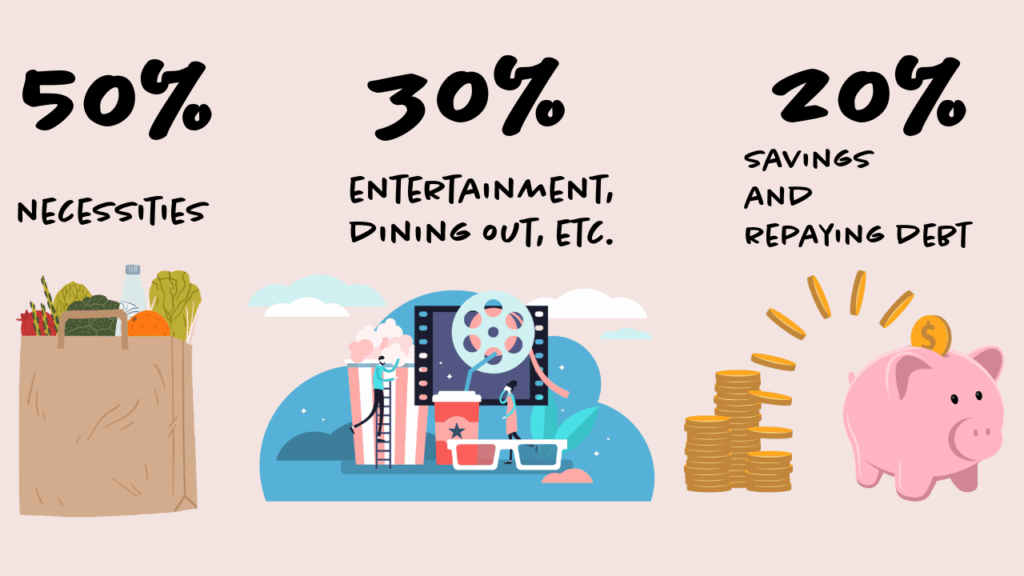
- 50% for necessities and other living expenses like groceries, mortgage or rent, daycare, etc.
- 30% for expenses such as travel, entertainment, dining out, etc.
- 20% for savings and repaying debt
When making your family’s budget, a good starting point is to track your family’s current spending habits to see how available funds are already being used across these three categories. Then, you can adjust from there. You can find apps that track your spending for you, so you don’t have to do it manually.
As you begin adjusting and allocating funds in your budget, first consider your basic living costs that are harder to change, like your mortgage, utilities, and car payments. Then, allocate funds to other areas that are more flexible, like groceries, clothing, etc.
Keep in mind that any amount you allocate to groceries or other flexible categories doesn’t have to be a rigid number but should serve as a benchmark for when you’re deciding what to purchase.
Plan your Meals
Now that your budget is set, it’s time to plan. Without a plan, you risk standing at the checkout counter with a total over your grocery budget. A grocery budget tip for moms is to lay out your family’s meals for the week in advance so you know what you need to buy before heading to the store.
A great place to start planning your meals is to check out your grocery store’s sales in the circular or on their app. Buying items on sale will not only save you money but also inspire recipe ideas. If meal ideas don’t immediately come to mind from the sale items, you can try using online recipe generators to give you some ideas. Simply type in a list of ingredients, and they can generate a meal idea for your family.
Make a Grocery List
After you have an idea of your family’s meals for the week, take inventory of your current stock and make a list of everything you’ll need. While the list won’t tell you an exact total, it should give you a solid estimate. It can also help you determine if you have the budget for extras, such as desserts and snacks- items that your family doesn’t need but are a nice treat.
Smart Savings Tips for Budgeting Groceries
As a budget-savvy mom, you’re always looking for ways to save on groceries. Consider these grocery budgeting tips for more ways for you to save on groceries:
- Use Coupons or Join Loyalty Programs: As we already touched on, looking at a store’s weekly ads tells you the sales and coupons you can use. Your store may also offer a loyalty program to join for additional savings.
- Opt for the Store Brand over a Name Brand: Generally, the store brand is cheaper than a name brand with an unnoticeable quality difference.
- Buy in Bulk: For items that your family uses frequently, such as toilet paper or paper towels, consider buying in bulk, as the price is generally cheaper per item or per pound.
- Take Inventory of your Pantry: Don’t buy than what you need. Take inventory of your pantry and refrigerator to avoid making unnecessary purchases.
- Track Results: Budgeting for Groceries vs Actual Costs
A helpful budgeting exercise is to compare your planned expenses to what you actually spent to see if you’re staying on track with your budget. You may find spending areas where you can cut back or reallocate funds. Perhaps you made an impulsive dessert purchase that pushed you over your weekly grocery budget, which you can avoid next time. Or maybe you go out to eat too often. By cooking at home, you can allocate more money to necessities or savings.
Final Thoughts for Budgeting for Groceries Successfully
By following this family essentials budget guide, you’ll be on your way to making cost-conscious trips to the store that won’t have you panicking over the total at the register. Remember, don’t be too hard on yourself. The budget is intended only as a guide for your grocery and essential spending.